Thursday, 29 September 2016

Mise En Scene In Films

Mise en scene is the arrangement of everything that appears in the framing: actors, lighting, props, costume. Mise en scene is a French term that means “placing on stage”. The frame and camera work are also considered part of the mise en scene of a movie. 


5 elements of mise en scene:


  1. Setting and props
  2. Costume, hair and makeup
  3. Facial expressions and body language
  4. Lighting and colour
  5. Positioning of characters and objects within the frame


Mise en scene- Annotate a still from a film
Film: The Break Up
 

Audience Research- Questionnaire

I have made a questionnaire to question my possible target market to see what they like about horror films. This is to help me create a horror film opening that will appeal to an audience.


Below is the link to the survey, please take a minute to complete it.
https://www.surveymonkey.co.uk/r/ZH9D6TQ

Tuesday, 20 September 2016

History of Horror Films

1920s
Horror films first started over 100 years ago when the first horror movie, only about two minutes long, was made by French filmmaker Georges Melies, titled 'Le Manoir Du Diable' (The Haunted castle/ The devil's castle).  Although America was home to the first Frankenstein movie adaptations, the most influential horror films through the 1920s came from Germany's Expressionist movement, with films like 'The Cabinet of Dr. Caligari' and 'Nosferatu' influencing the next generation of American cinema. 'The Hunchback of Notre Dame', 'The Phantom of the Opera' and 'The Monster', were all created in America and set the stage for the Universal dominance of the 1930s.

1930s
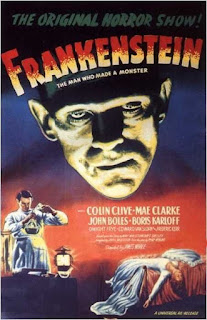
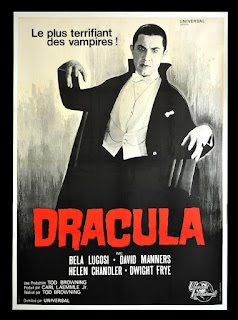
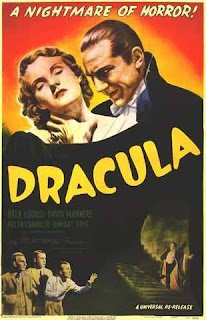
After the success of  'The Hunchback of Notre Dame' and 'The Phantom of the Opera', Universal Studios released many hit horror films during the 1930s, beginning with 'Dracula' and 'Frankenstein' in 1931. In the early 1930s, Germany continued its artistic streak with 'Vampyr' however, the Nazi rule forced much of the filmmaking talent to emigrate. The first American werewolf film 'The Werewolf of London' (1935), the first zombie movie 'White Zombie' (1932) and the landmark special effects movie 'King Kong' (1933) were also created in the 1930s.
1940s
Even though Universal's monster films were a success in the 1930s, in the 1940s they weren't . Universal Studio resorted to comedy- horror, films such as 'Abbott and Costello Meet Frankenstein' which had some success. During the 1940s, other studios created more serious horror films such as 'Cat People' and 'I Walked with a Zombie'.

1950s
Various cultures helped shaped horror movies during the 1950s, the Cold War influenced fears of invasion in the films 'Invasion of the Body Snatchers' and 'The Thing from Another World'. Nuclear proliferation influenced visions of rampaging mutants, movies such as 'Them!', 'The Beast from 20,000 Fathoms' and 'Godzilla'. Scientific breakthroughs led to mad scientist plots in movies such as 'The Fly'. International efforts include the first full-length Japanese horror movie 'Ugetsu' and the first Italian horror movie in the sound era 'I Vampiri'.
1960s
Alfred Hitchcock opened the decade with his shocking, taut, blood-curdling film 'Psycho' (1960), his greatest masterpiece of comedy/horror and effective psychological tension. To increase the suspense factor and to tease the public, Hitchcock instructed that no one was to be admitted to theatres once the film started, and an advertising slogan warned viewers to not give away the ending. His next film was 'The Bird' (1963), a big-budget suspense/thriller about an onslaught of bird attacks in a California coastal town - made with startling photographic special effects. It was Hitchcock's only major film without incidental music.


1970s
Horror movies of the 1970s reflect the grim mood of the decade. After the optimism of the 1960s, with its cultural revolutions, the seventies were something of a disappointment. However, when society goes bad, horror films get good, and the 1970s marked a return to the big budget, respectable horror film, dealing with contemporary societal issues, addressing genuine psychological fears.


1980s
Horror movies of the 1980s are when special visual effects finally caught up with the gory imaginings of horror fans and movie makers. Technical advances in the field of animatronics, and liquid and foam latex meant that the human frame could be distorted to an entirely new dimension, onscreen, in realistic close up.

1990s
The Decade of Money, Mega-Spending and Special Effects. In the 1990s for the most part, cinema attendance was up - mostly at multi-screen cineplex complexes throughout the country. Although the average film budget was almost $53 million by 1998, many films cost over $100 million to produce, and some of the most expensive blockbusters were even more. In the early 1990s, box-office revenues had dipped considerably, due in part to the American economic recession of 1991, but then picked up again by 1993 and continued to increase. The average ticket price for a film varied from about $4.25 at the start of the decade to around $5 by the close of the decade.

2000s
September 11th, 2001. The events of that day changed global perceptions of what is frightening, and set the cultural agenda for the following years. The film industry, already facing a recession, felt very hard hit as film-makers struggled to come to terms with what was now acceptable to the viewing public. There was even a call to ban horror movies for world peace But, by 2005, the horror genre was as popular as ever. Horror films routinely topped the box office, it seems that audiences wanted a good, group scare as a form of escapism, just as their great-grandparents chose Universal horror offerings to escape the miseries of the Depression and encroaching world war in the 1930s.


Sunday, 18 September 2016

Horror Film Analysis 1- The Woman In Black


1.The first frame includes the ‘Momentum Pictures’ and ‘Hammer’ logos. They are shown at the beginning of the film so that the audience knows which film production and companies produced the film. They both have black backgrounds which could represent horror- darkness and danger. ‘Hammer’ is written in a bold, red font which instantly resembles horror because red makes you think of blood in a horror film.


2.The first thing seen in the film is someone pretending to pour tea into mugs. We don’t know which character is doing this yet however it suggests a chid playing as they aren’t actually pouring any tea into the mugs.  This is a close up shot of what’s happening. The colours are dull and dark, which support the theme of horror because a typical horror film is dark and not bright or colourful. It starts with some non- diegetic sound, it is spooky music which is creating a mysterious atmosphere which infers that something is going to happen. The opening scene is minimalist as it is set in an empty room.


3.The third frame shows three young girls playing with their toys and pretending to make them drink tea (that they were pretending to pour in the previous shot). There is no dialogue or action. These characters could be representing innocence because they’re young children, something bad may happen to the innocent characters. In the background, you can see that they are in a house which looks quite dark- dark walls and low lighting. The instruments keep layering up to create more of an atmosphere. It builds into a silence.

4.The fourth frame is a high angle, which shows the young girls in their room. The silence is broken when they hear what sound like church bells chiming  and look up from what they’re doing. It then cuts into a medium shot when the girls look at the window. As they’re turning around, you hear the high pitched church bells getting louder and building up.

5. This is a zooming shot, the camera slowly zooms into the window, where the young girls are looking. The room is still quite dark, with low lighting however, outside it is bright and a tree is the only thing that can be seen out of the window. The church bells are still chiming throughout this part, building up with other instruments which creates the same tune as before the silence earlier.

6. In this frame you see the three girls looking scared as they stand up. This is a medium shot which cuts into a close up shot of one of the girl’s feet as she is standing up. Sound is still the tense music with church bells with many instruments.


7. This frame shows the girls walking, they are stepping on and breaking their mugs and dolls which they were playing with. You hear smashes as they step on them and brake them. This is an extreme close up shot of their feet and what they are stepping on. This suggests that something isn't right. The music builds up in anticipation as they get closer to the windows.

8. This frame shows the young girls walking towards the window. This is a tracking shot which follows the girls as they walk up to the window. The shot changes to see the back of them as they step onto the windowsill. You hear the same tense music building up and when they step onto the windowsill, you hear a low pitched organ added in.  

9. The girls jump out of the windows. You can’s see anything outside because it is very misty which is mysterious and makes the audience wonder what they’re going into and whether they’ve got a long drop down out of the window. The music cuts off after they jump out of the windows, the audience is left looking at the windows and you hear their parents screaming "my babies!" which leads to the audience wondering what happened.

Thursday, 15 September 2016

Key Features of Horror Films.


Mise en scene:
-lighting and colours
-setting
-props
-costume
-hair/makeup
-positioning of characters

Characters:
-victim
-killer/monster/zombie
-hero
-family/friends
-police/detective
-villain

Editing:
-quick transitions
-jump cuts
-filters

Camera:
-pans
-focus pulls
-180 degrees
-1st person point of view
-close up
-tracking

Location:
-abandoned house
-forest
-hospital
-graveyard
-haunted house
-mental asylum
-campground

Plot:
-historical death
-found footage
-moving to a new house with a history
-serial killers/zombies

Sound:
-diegetic (ambient)
-tense music/ sound FX
-dripping
-creaking
-footsteps
-(children) laughing
-violins/ string instruments
-non diegetic (scare/ sound FX/ added sounds)

Media in my life


Millions of people, including myself, are using media in their lives every day. Things like watching TV and movies, reading newspapers, social media, playing video games, using a mobile phone or tablet, going on the internet, listening to the radio and watching videos online. Media has become an important part of so many people's lives for example, quite often TV dominates the life of the family, also the radio is turned on most of the time to create background noise. So, media becomes a very important part of our lives.


I use media every day, which includes social media. I like to go on many social media apps and websites throughout the day such as Snapchat, Instagram and Twitter. I use social media because it's a great way to keep in touch with friends and family (who you may not see very often) to see what they are doing. For example, on all of these websites I mentioned, you can share photos with your friends and followers for them to see what you've been up to. I think it's an excellent way to keep in touch with people you know and might not necessarily see every day. Also, the internet is an important form of media in my life, not only to go on these social media websites, but also for research and school work.

On a normal school day, I do my homework on my laptop, making the use of the useful research engines online and programmes such as Microsoft PowerPoint and Word where I can organize my information accordingly. I use the internet and online programmes to do my school work because I find that it is a very helpful, fast, easy and informative way of research and learning. On a typical school day, I will use the internet at least once, if not more to do my school work and research. The use of internet is very popular and is the main use of media for schools, probably because its quick and easy to use and can be very helpful for homework, coursework and researching.


When it comes to preferences, I enjoy entertainment media, almost every day I watch a TV programme or a movie on Netflix. I think that media is the most efficient way of obtaining information and entertainment. Also, it has the power to persuade, inform and motivate its audience, for example, advertisements are a very effective example of persuasive media.